Your October market update: rates edge up, prices cool nationally

Quick Answer
Average five-year fixed mortgage rates hit 6% in early October 2026, the highest in three years, after sub-5% deals collapsed 99% in September. National house price growth halved to 0.8% (Nationwide), but Stroud (GL5) remains a balanced market while the Cotswold villages (GL6) favour buyers.
Key Takeaways
- ✓Average 5-year fixed mortgage rates hit 6% in early October 2026, the highest in 3 years
- ✓Sub-5% mortgage deals collapsed from 1,494 to just 9 during September, a 99% wipeout
- ✓"Your First Home" equity loan scheme for first-time buyers announced 26 September, details due at the Budget on 28 October
- ✓National house price growth halved to 0.8% annually (Nationwide, September 2026)
- ✓Stroud (GL5) remains a balanced market; the Cotswold villages (GL6) favour buyers
- ✓Bisley, Eastcombe and Oakridge Lynch is the priciest and scarcest pocket of the valleys, averaging £724,000 with just 42 sales a year
September was not a quiet month. The bond market had a wobble sharp enough to drag mortgage rates up with it, nine out of ten cheap fixed deals vanished almost overnight, a new "Help to Buy" scheme landed out of nowhere, and national house price growth quietly halved. Here is what actually happened, with the sources to back it up, and what it means locally, nationally and for the wider economy.
What that "minus 19%" figure actually means
You will see a score like "minus 19%" mentioned below, so here is what it means in plain terms. Surveyors and agents across the country get asked a simple question each month: are you seeing more buyers enquiring, or fewer? If more of them say "fewer" than say "more", you get a minus score. Minus 19% means, out of every 100 agencies and surveyors, 19 more are seeing fewer buyers than are seeing more. It is not a count of actual sales falling, it is a show of hands on which way things are moving, and it usually shows up before the real sales figures catch up.
The economy and interest rates
The Bank of England held the base rate at 3.75% on 17 September, but the vote split 6 to 3, with three members (Greene, Mann and Pill) wanting to raise it straight to 4%. That is a closer vote than markets expected, and it comes as CPI inflation rose to 3.1% in August, with the Bank itself expecting it to push above 4% early next year as energy costs feed through. Three months ago the conversation was how fast rates would fall. It is now whether they rise again, with markets currently pricing the curve to peak around 4.9% by the end of 2027. The next decision, on 5 November, is genuinely live, not a formality.
Access to finance
And here is the part that actually bit in September: average five-year fixed mortgage rates hit 6% in early October, the highest in three years, after a brutal month for cheap deals. The number of fixed-rate deals priced below 5% collapsed from 1,494 at the start of September to just nine by the end of it, a 99% wipeout. The trigger was the bond market, not the Bank: 30-year gilt yields broke 6% for the first time since 1998, 10-year yields hit their highest since 2007, and 5-year yields their highest since 2008. Mortgage approvals fell to 54,900 in August, the lowest since December 2023, and the effective rate on newly drawn mortgages rose to 4.6%.
Wages and affordability
Regular pay across the whole economy grew 3.5% in the year to June, but that masks a big split: private sector pay growth is down to 2.8%, the weakest since 2020, while public sector pay is up 6.1%. For most people buying with a private sector income, pay is not outrunning mortgage costs the way it was earlier this year.
The Treasury and policy
The Chancellor has ruled out changing stamp duty at the Budget on 28 October, and bigger ideas like replacing stamp duty and council tax with an annual property tax have also been taken off the table for now. There is continued speculation about Capital Gains Tax changes affecting landlords and second home owners, and about the £2 million "mansion tax" threshold, but nothing is confirmed.
The bigger policy news is "Your First Home", a new government-backed equity loan scheme for first-time buyers on new-build homes, announced 26 September by the Prime Minister. The outline: a 2.5% deposit, a 20% government-backed equity loan with an initial interest-free period, household income caps, local price caps, and a contribution from participating developers. The Chancellor will confirm the costs and timings at the Budget on 28 October. Housebuilders clearly like the sound of it: Persimmon's share price jumped around 15% on the news, with Barratt Redrow, Bellway and Taylor Wimpey each up roughly 12% and Vistry around 10%.
Housing supply
England delivered an estimated 199,500 net additional homes in the year to March 2026, down from 208,600 the year before, against the government's own target of 300,000 a year. Forecasters now expect delivery to fall further still, to around 152,000 in 2026/27, barely half that target. NHBC's own registration figures for the second quarter of 2026 show new home starts down 4% on a year earlier. That shortfall is the quiet driver under everything: fewer new homes means existing character property, especially the kind this area is known for, keeps finding buyers even while the national mood has cooled.
Rents
UK private rents rose 3.8% in the year to August, up from 3.7% in July, averaging £1,400 a month nationally and £1,459 in England. The South East had the slowest rent inflation in the country at 3.0%, London's has picked up to 3.5%. Rents are still climbing, just not accelerating the way they were a year ago.
The national picture
Nationwide's September index showed annual house price growth halving to 0.8%, down from 1.6% in August, with the average price (their measure) at £274,251. HM Land Registry's official index for August went further, showing an actual annual fall of 0.4%, the first annual fall since November 2023, though the South West bucked the trend with prices up 1.9% year on year to £305,000. RICS surveyors reported new buyer enquiries falling for a third straight month, while agreed sales actually improved slightly from August.
Stroud and the Cotswold villages are two different markets right now
- GL5 (Stroud): average sold £335,798, balanced market, 256 homes for sale, around 25 sales a month, 7-year growth +19.7%
- GL6 (Cotswold villages): average sold £436,644, buyer's market, 258 homes for sale, around 14 sales a month, 7-year growth +7.8%
(Source: KW LocalEdge local market data, as at 1 October 2026.) GL5 is still the busier of the two by a wide margin, almost double GL6's turnover, and genuinely balanced between buyers and sellers. GL6 is softer: more stock sitting relative to demand, roughly half the monthly sales rate.
The valleys, area by area
- Cainscross and Ebley: £286,000 average, 137 sales a year
- Stroud: £316,000 average, 119 sales a year
- Rodborough: £336,000 average, 70 sales a year
- Brimscombe and Thrupp: £407,000 average, 86 sales a year
- Nailsworth and Horsley: £419,000 average, 71 sales a year
- Chalford and Bussage: £421,000 average, 99 sales a year
- Minchinhampton: £589,000 average, 30 sales a year
- Woodchester and Amberley: £592,000 average, 68 sales a year
- Painswick and Whiteshill: £604,000 average, 67 sales a year
- Bisley, Eastcombe and Oakridge Lynch: £724,000 average, 42 sales a year
(Source: HM Land Registry, via adamclegg.co.uk house price data, refreshed 6 October 2026.)
Area in focus: Bisley, Eastcombe and Oakridge Lynch
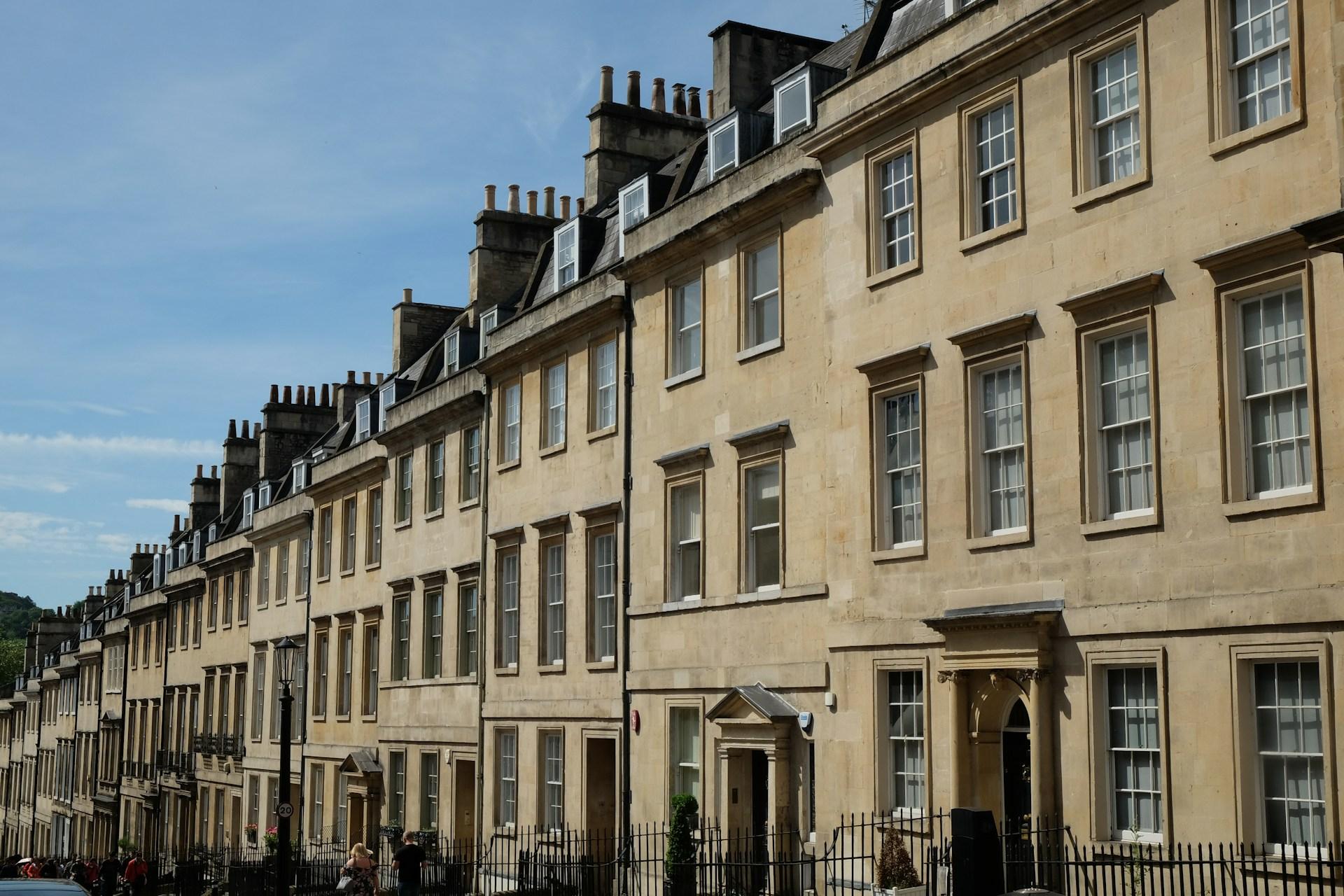
This pocket of the valleys is the most expensive on our patch, averaging £724,000 against a Stroud-wide figure nearer £350,000, and it trades the least often of anywhere we track, just 42 sales a year. It is postcard villages, period stone, and very little coming to market at any one time, which is exactly why buyers who want this specific kind of property end up waiting, and why sellers here tend to get a genuinely competitive process when something good does appear.
What it all means
Put the whole picture together: rates nudging up rather than down, approvals softer, national price growth flattening, and a government still well behind on new homes. Nothing here says crash, and nothing says boom. It says the easy "rates only go one way" story is over for now. Locally, that national flatness simply is not what is happening on the ground here, GL5 is still moving, the valleys are still trading, and the scarcest pockets are still scarce.
Adam's view
My honest read: the national headlines about falling prices and cooling demand do not match what I am seeing on the ground in GL5. We are still getting viewings, still getting offers, and the stock that is priced right is moving. GL6 is a different conversation. There is more competition for buyer attention there, so the vendors willing to be realistic on price are the ones getting through to completion.
Thinking of selling, or just curious what your home is actually worth in this market? Get in touch for an honest, no-obligation valuation.
Sources: Bank of England (MPC minutes 17 Sept 2026; Money and Credit, Aug 2026), ONS (CPI Aug 2026; Average Weekly Earnings Apr-Jun 2026; Private Rent and House Prices, Aug 2026), Moneyfacts (reported via ITV News and AJ Bell, 5 Oct 2026), RICS UK Residential Market Survey (Sept 2026), Nationwide House Price Index (Sept 2026), HM Land Registry UK House Price Index (Aug 2026), gov.uk ("Your First Home" scheme announcement, 26 Sept 2026), Express & Star (26 Sept 2026, housebuilder share prices), NHBC New Home Statistics Review Q2 2026, KW LocalEdge local market data (1 Oct 2026), HM Land Registry via adamclegg.co.uk (refreshed 6 Oct 2026).
The Market Pulse
My free monthly local market update. Real price data and what's actually selling across Stroud, the Five Valleys and the Cotswolds, plus the occasional note from me. No spam, unsubscribe anytime.
About Adam Clegg, MPlan
Adam Clegg is an independent estate agent based in Stroud, specialising in premium Cotswold property, investment, and land. He provides direct, honest, and rigorous property advice-offering a one-to-one advisory relationship that cuts through the noise of the standard high-street sale.
Read full profile →