Planning: How It Quietly Influences What Your Property Is Worth


Key Takeaways
- ✓England has run a plan-led planning system since 1947, which means what can and cannot be built, changed or extended is decided by policy rather than left to the market, and that framework shapes property value far more than most people notice.
- ✓Where your property sits within the system, the Local Plan, the settlement boundary, the designations over it, decides what it can become, and latent potential, or the lack of it, feeds straight into what a buyer will pay.
- ✓In Stroud, where the Local Plan is not yet adopted, the position is unusually unsettled, which brings both risk and opportunity, and it is the part of a sale most agents quietly leave to the solicitors.
What the Planning System Actually Is
It helps to start with how the system works, because once you understand the shape of it, the effect on value makes sense. Modern planning in England began with the Town and Country Planning Act 1947, which effectively nationalised the right to develop land, so that from then on you have needed permission to build or materially change the use of property. That is what people mean when they call ours a plan-led system, and it is quite different from the zoning or codified systems used in places like much of the United States, where what you can build is set out in advance by the zone your land sits in. Here, development is guided by plans and policies, and decisions are made against them case by case.
Three things sit at the heart of it:
- The Town and Country Planning Act provides the legal framework.
- The National Planning Policy Framework (NPPF) is the government's national planning policy for England, setting out what the system is trying to achieve and the principles councils must follow.
- The Local Plan, produced by each local authority, is where that national picture meets your street.
The NPPF is not fixed, and it matters which version applies. The current framework was revised in December 2024, which raised the national housing target under the standard method to around 370,000 homes a year, introduced the idea of "grey belt" land, and strengthened the push to build on brownfield sites. It is already being reformed again, with a further round of changes consulted on over the winter of 2025–26 and the Planning and Infrastructure Act 2025 bringing in measures such as a national scheme of delegation for how decisions are taken. The direction of travel is firmly towards building more, and faster, which is worth keeping in mind where a property's value is tied to development potential.
A Local Plan is the document that shapes your area for years at a time. Councils are expected to review it at least every five years, though in practice some take considerably longer, and a plan can be substantially rewritten when a new planning regime comes in. It covers far more than housing, and in broad terms it sets out:
- Housing: the numbers a district must deliver, and the specific sites allocated for it.
- Where development goes: the settlement boundaries (the red line separating where development is broadly acceptable from open countryside) and a settlement hierarchy that steers more growth to the larger towns and less to villages and rural areas.
- Infrastructure and services: schools, healthcare, roads, transport and green spaces.
- Designations: protected areas such as the Cotswolds National Landscape (formerly the AONB), Conservation Areas and Green Belt.
- The wider vision: employment land, sustainability and climate, and how the district should grow overall.
Alongside the plan, councils must demonstrate a five-year supply of deliverable housing land and plan for their objectively assessed housing need, judged in part against local affordability ratios.
When an application is decided, it is determined in line with the Local Plan unless material considerations indicate otherwise, and the NPPF carries a presumption in favour of sustainable development, set out at paragraph 11, which bites harder where a plan is absent or out of date or where the five-year housing land supply cannot be shown. That is the part that becomes very relevant in a district like ours.
How Planning Shapes Supply, Demand and Place
All of this does more than govern individual sites, it shapes the character and the economics of whole areas. Cheltenham is a useful example close to home, ringed by Green Belt and with a great deal of protected landscape nearby, which has constrained its growth over many years and kept supply tight. Where land is genuinely scarce, that scarcity tends to support values, though it also pushes affordability the wrong way.
The system also decides how much housing goes where, and that is not always neat. Authorities have historically had to take on a share of the unmet housing need of their neighbours, so growth can land in one district because another cannot accommodate it. Each council is meant to plan for delivery across its plan period, weighing geography, population, need, affordability, landscape, infrastructure and the local economy to plan properly for place and growth. Stroud is the live example of what happens when that process stalls, because where a plan is not in place and a five-year supply cannot be demonstrated, applications fall to be decided more on their individual merits, and the presumption in favour of sustainable development carries more weight. You can follow the current position via the Stroud District Local Plan review. That can still produce good development, and it makes genuine local consultation more important rather than less, because that is where communities can help shape a scheme into the best version of itself.
Underneath all of it sits affordability and the basic need to house people, which is the pressure the whole system is wrestling with, because there are simply not enough homes, which is why the latest standard method points to a national need of around 370,000 a year. Planning is the lever that decides where those homes can go, and that makes it central to value rather than a technicality.
How Planning Influences What Your Property Is Worth
Bringing it back to your own home, planning influences value in several ways at once. There may be genuine development potential, an extension, an annexe, a plot in the garden, a conversion, and that potential can add real value, or there may be none, and a designation may constrain what can be done at all. It is worth saying that planning value is not always crystallised, because potential and the appetite to use it are different things. You might never want to build the extension yourself, but the fact that it could be built carries worth to an incoming buyer, and a good marketing approach makes sure that latent value is recognised rather than missed.
Planning can also protect value, where a Conservation Area safeguards the architectural and historic character of a place, which is frequently the very reason people want to live there. It can enhance an area, where a plan allocates new infrastructure, better schools, road and transport improvements, green infrastructure and the economic benefits that follow. And it can constrain local supply through designations and boundaries, which tends to support existing values even as it adds to the affordability problem.
The mechanism, once you stop and think about it, is that price reflects what the market believes can be done with an asset over time, and planning is the framework that decides which of those things are actually achievable. Two pieces of land of identical size can differ in value many times over, depending on whether one sits inside a development boundary with policy support and the other in open countryside where the presumption runs firmly against new building. Buyers are increasingly sophisticated about this, and an agent who cannot speak to the planning position with any confidence tends to leave value on the table, either by under-pricing genuine potential or, just as damaging, by over-promising potential the policy framework will never actually deliver.
Permitted Development: What You Can Do Without Permission
A good deal of what owners assume requires a full planning application can in fact be done under permitted development rights, the rights granted nationally that allow certain works to proceed without a conventional application, and understanding where those rights begin and end is one of the more useful things I can offer a seller before we go to market. Single-storey rear extensions within the relevant size limits, certain loft conversions, outbuildings within the curtilage, and in some cases the conversion of agricultural or commercial buildings to residential use under the prior approval routes, can all add real value without the cost, delay and uncertainty of a full application, provided the property qualifies.
The important caveat, and it is a significant one in this part of Gloucestershire, is that permitted development rights are routinely restricted or removed in sensitive locations, so a house in a Conservation Area, within the Cotswolds National Landscape, or subject to an Article 4 direction, may have far narrower rights than its owner believes. I have seen sellers price in extension potential that was not there once the designations were checked, and I have seen the opposite, a building carrying obvious unrealised value under a prior approval route that nobody had thought to investigate. My approach is the same either way, which is that we get the property's permitted-development position properly checked before deciding how to present it and what to ask for it, because that order of operations protects you from both disappointment and undersell.
Buying or Selling With a Planning Angle
When a property is marketed with a planning angle, whether an existing consent, a lapsed permission, an allocation in the Local Plan, or simply credible unrealised potential, the way that angle is evidenced and communicated makes a substantial difference to both the price achieved and the certainty of the sale completing. A site offered with a live, implementable consent is a far more bankable proposition than one offered on the vague promise that something might be permitted one day, and buyers price that difference in accordingly, so part of my job is to be honest with sellers about which category they are genuinely in.
For buyers, the planning angle cuts the other way, and I would always look carefully behind a headline before committing, because a consent can carry conditions that materially affect viability, an allocation can be years from delivery, and a permission can be close to lapsing. I can take a view on these as part of advising you, and where a scheme is worth taking further I work with a range of planning and development consultants to firm it up, so you go in with an accurate picture rather than discovering a problem during conveyancing, by which point goodwill and time have usually been lost on both sides.
Conservation Areas, Listed Buildings and the Cotswolds National Landscape
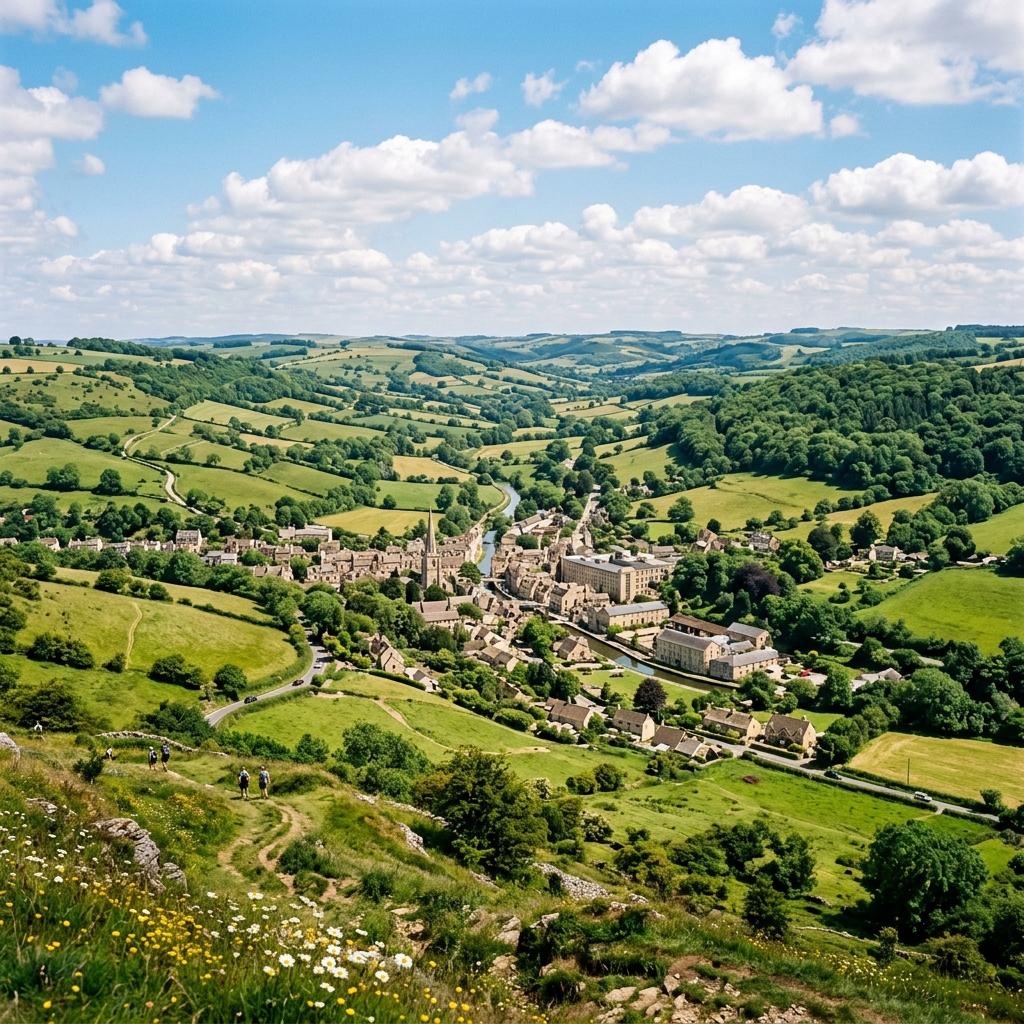
Much of the area I cover, across the Five Valleys, the wider district and out towards the Cotswold escarpment, falls within designations that shape what owners can and cannot do, and these are not minor administrative details, they go to the heart of value and saleability:
- The Cotswolds National Landscape carries strong protection against inappropriate development.
- Conservation Areas impose additional controls on demolition, alterations and some external works.
- Listed building status brings a separate consent regime that applies to far more than most owners expect, frequently including internal features.
I can take a view on what can and cannot reasonably be done within these constraints, and where a property genuinely needs specialist input, a heritage consultant for a sensitive listed building, for instance, I can point you in the right direction. None of this makes a designated property less desirable, and the designation is often exactly why people want to live there, but it does change the rules, and a buyer is far better understanding them before they offer rather than after, so they can bid on full information. In many cases the concerns turn out to be manageable, or not really concerns at all, once they are properly explained. I am mindful, too, that owners of listed and Conservation-Area properties sometimes carry a quiet worry about whether past works were properly consented, which is a real issue at the point of sale, and it is far better to identify and address that early than to have it surface in enquiries.
Adam's View
I came to estate agency from the heavier end of property. Through an MPlan and roughly twenty years in development and strategic land, I have:
- masterplanned and helped bring forward entirely new communities;
- sold sites for hundreds, and in places thousands, of homes to housebuilders;
- bought and developed residential, extra-care and industrial schemes;
- assessed land values, worked through complex legal matters and local economies, and taken sites through planning;
- come to understand how place, infrastructure and market economics shape what land and property are worth;
- developed a working grasp of valuation, and of how land and development sit within the planning system;
- handled transactions approaching £130m, and spent real time understanding how buildings actually get built.
Set against all of that, selling a single house is a relatively simple endeavour, and it means I genuinely read the planning picture where it is relevant rather than gesture at it. In a district like Stroud, where the Local Plan remains unadopted, that reading is worth real money to the people I act for. Most agents will tell you what a property is, whereas I can take a view on what it might realistically become and what it probably cannot, give you a nudge on how likely the planning is, and shape the asking price and the marketing around it. Where a scheme is worth taking further, I can help you build the right team around it, architects and planning consultants, to crystallise the value and position the property for the strongest possible sale.
Sources & Further Reading
- National Planning Policy Framework — gov.uk
- Permitted development and planning applications — Planning Portal
- The local plan position for the district — Stroud District Local Plan review
- House price data — HM Land Registry UK House Price Index
The Market Pulse
My free monthly local market update. Real price data and what's actually selling across Stroud, the Five Valleys and the Cotswolds, plus the occasional note from me. No spam, unsubscribe anytime.
Frequently Asked Questions
Does planning potential actually increase what I can ask for my property?
It can, materially, but only where the potential is real and can be evidenced, because buyers discount vague promise heavily and pay genuine premiums for credible, deliverable potential. Even where you would never carry out the works yourself, the fact that they are possible can add worth in a buyer's eyes, provided it is presented honestly.
My property is in a Conservation Area or the Cotswolds National Landscape. Is that a problem when selling?
Not at all, and it is often part of the appeal, but it does change what a buyer can do, so it needs to be presented accurately. I will flag the relevant designations early and give you an honest view of what is likely to be achievable, which tends to reassure buyers rather than worry them.
Should I wait for the Stroud Local Plan to settle before selling land with development potential?
It depends entirely on your site and your circumstances, and there is no single right answer, which is why I would want to look at the specifics with you. In an unsettled plan period, timing is a genuine strategic decision rather than an afterthought. If you own a property or a piece of land where the planning position might be doing more for, or against, your value than you realise, I would be glad to take a proper look and give you an honest view, with no obligation either way. I am based in Stroud and cover the Five Valleys, the wider district, Cheltenham, Gloucester and Bristol, so do call me on 07496 029683, or pop over for a tea and a chat whenever suits you.
About Adam Clegg, MPlan
Adam Clegg is an independent estate agent based in Stroud, specialising in premium Cotswold property, investment, and land. He provides direct, honest, and rigorous property advice-offering a one-to-one advisory relationship that cuts through the noise of the standard high-street sale.
Read full profile →