Chapter 01
The Hanging Valley.
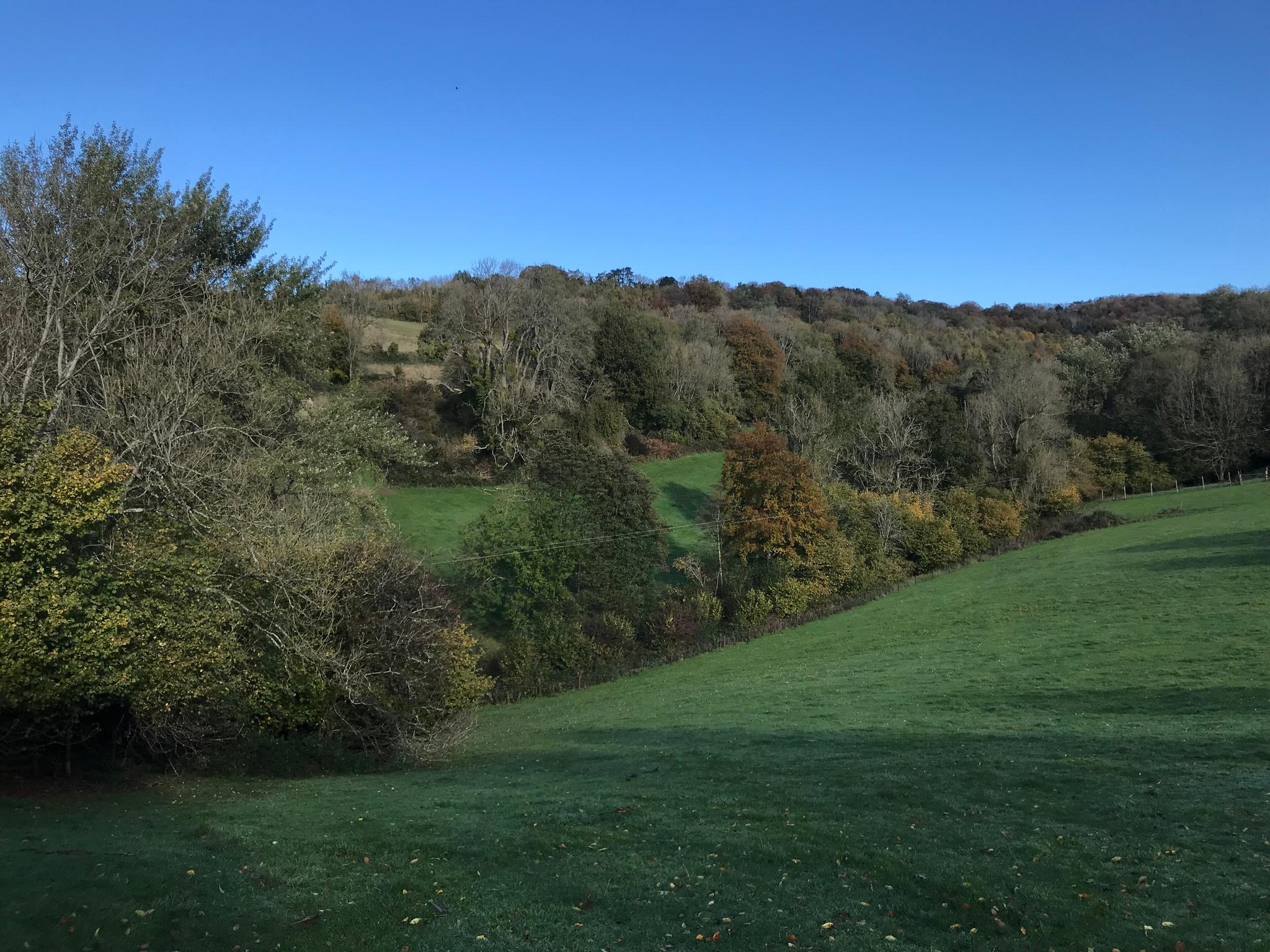
Slad is geography first and literature second — though it is the geography that produced the literature, so the order matters. The valley runs from the high ground above Bulls Cross down to Stroud, narrow and steep-sided, with beech hanging on the western slope and limestone pasture breaking out of the eastern one. The B4070 traces the contour about halfway up; Slad Brook (variously Painswick Stream depending on which map you trust) runs the floor. The village proper is strung along the road on the eastern bank, the church and the pub at its centre, the lanes splintering off into the hamlets of Bulls Cross, Down Hill, Elcombe and Steanbridge. Population a little under 400 at the 2011 census, the parish administered jointly through Painswick Parish Council, and the whole valley designated within the Cotswolds National Landscape. Steanbridge Pond — the millpond where Miss Flynn drowns in *Cider with Rosie*, and where Lee skated as a child — still sits below Steanbridge House. The Cotswold Way runs the western ridge above the village on its way from Painswick to Stroud. You buy here for the valley itself: hanging woods, an active brook, and the rare Cotswold privilege of a view that is mostly trees and field rather than mostly other houses.
Chapter 02
The Woolpack.
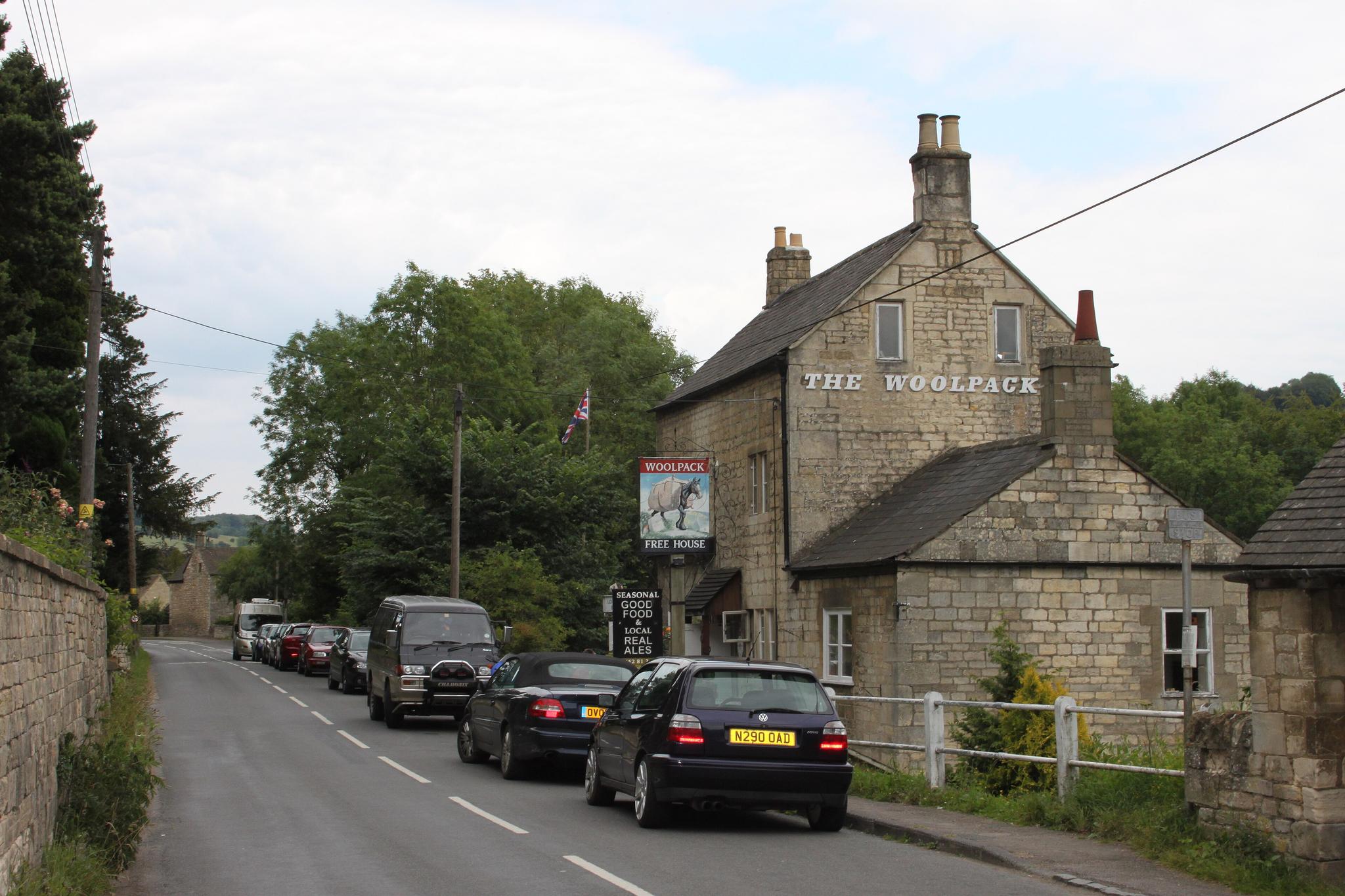
The Woolpack has been serving the village since the seventeenth century, and for thirty years it served as Laurie Lee's local — the place he returned to after his travels and where he drank until shortly before his death in 1997. It remains a genuine pub rather than a restaurant with accommodation: low beams, real ales, a garden that catches the afternoon sun above the valley floor. On summer weekends the car park fills with walkers arriving from the Slad Valley circuit and the Cotswold Way. On Tuesday evenings in winter, it is mostly people who live here.
Chapter 03
Beyond the Book.
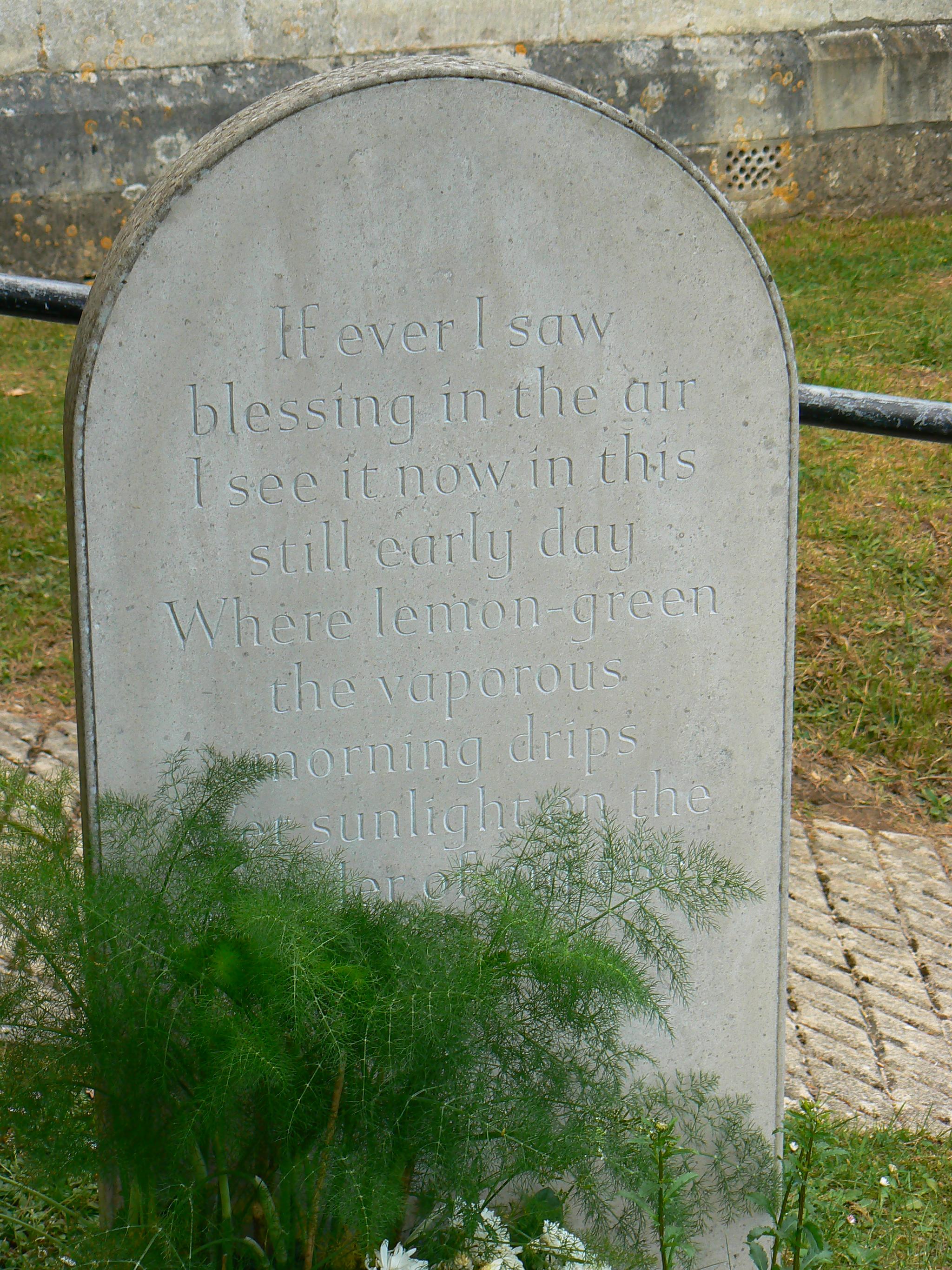
It would be easy to write Slad as a one-author village and stop there — and easy to be wrong. The Lee thread is the loudest, but the valley has carried a steady cultural current either side of him. The poets Frances and Michael Horovitz lived just outside the village through the 1970s; the painter and sculptor Daniel Chadwick still runs the pub; the next valley over holds Lynn Chadwick's Lypiatt Park sculpture grounds, established as a working park from 1971. The environmental lawyer Polly Higgins — who spent the last decade of her life pushing for ecocide to be recognised as an international crime — is buried in Holy Trinity churchyard a few feet from Lee. The Slad Valley has, for the better part of a century, been a quietly serious place: a working Cotswold valley that has consistently attracted people who make things and write things, and that has resisted the prettification that has thinned out other villages within ten miles. Day to day the rhythm is what it has been for generations — the brook, the woods, the pub, the church, the school run down to Painswick or Stroud, and a community that knows the difference between heritage and pastiche.
---
Chapter 04
Slad Brook & the Valley Floor.
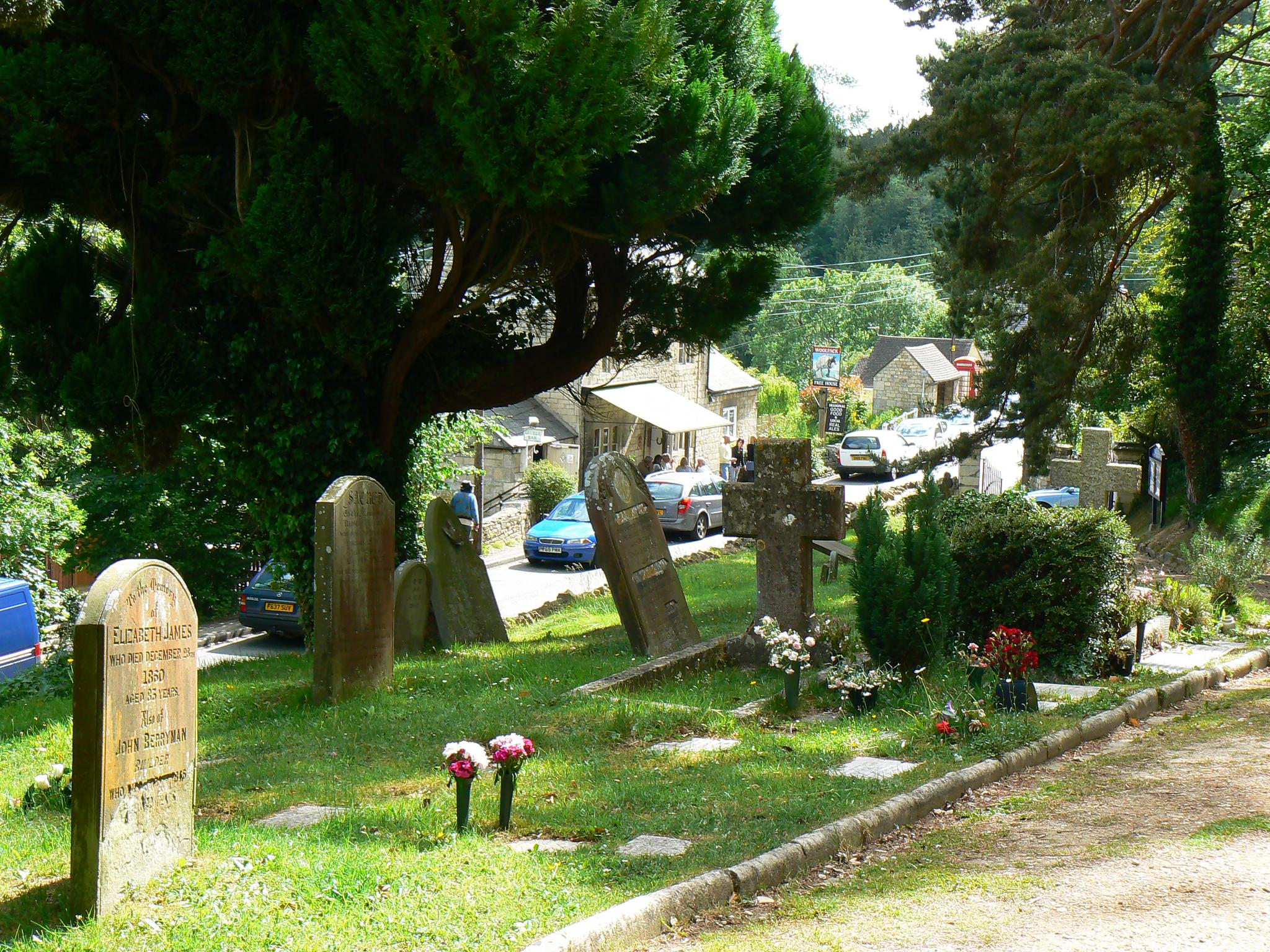
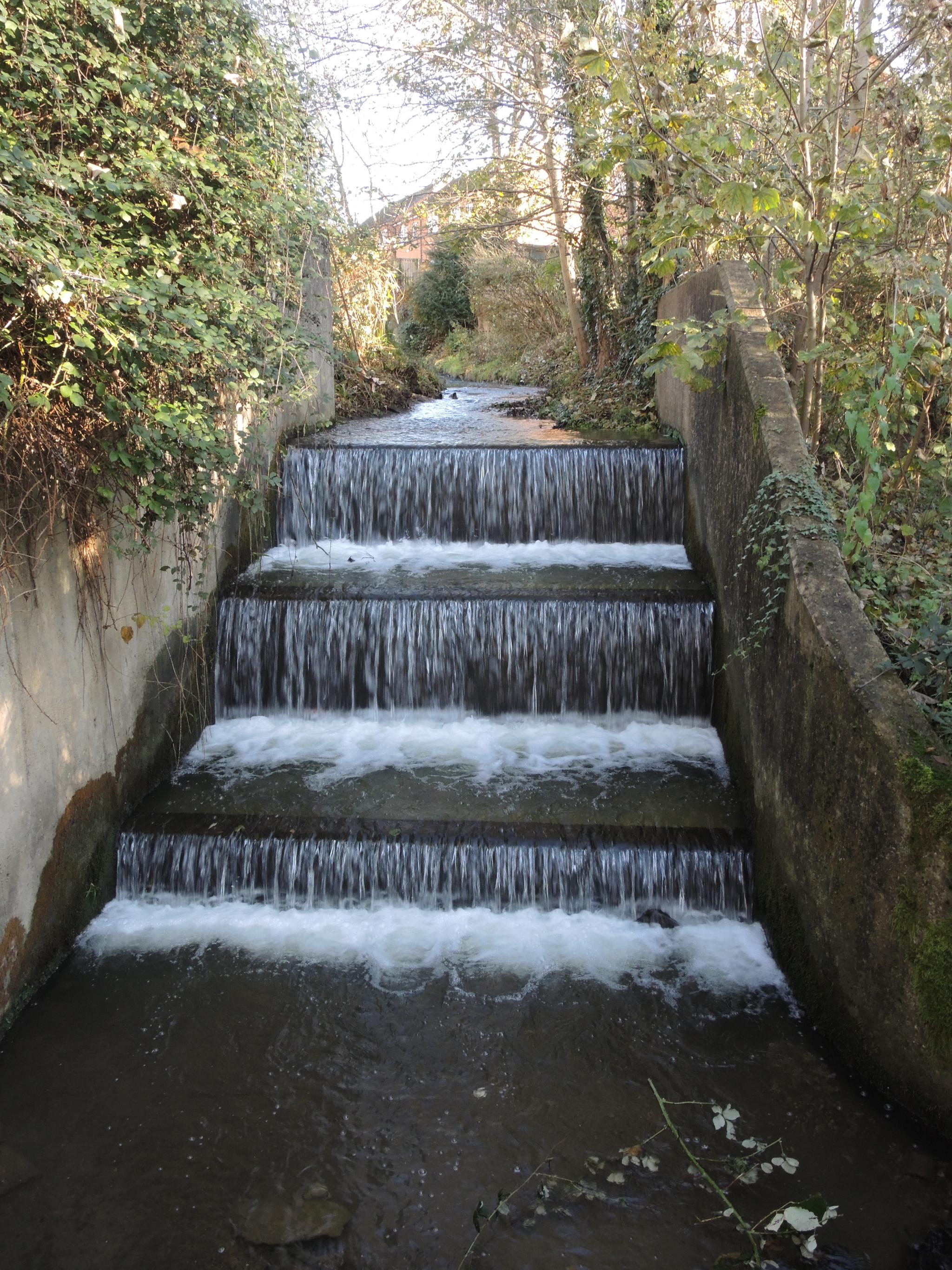
Below the village, Slad Brook runs through a valley floor that has remained largely unchanged since Laurie Lee described it in the 1930s. The stepped weir on the brook and the meadows above it are managed as habitat; the fields that slope up to the village on both sides give Slad its characteristic enclosed quality — a valley that keeps its own counsel. The footpath network connecting Slad to Stroud, Painswick and the Slad Valley walk draws walkers from across the district.