Chapter 01
On the Ridge Above the Golden Valley.
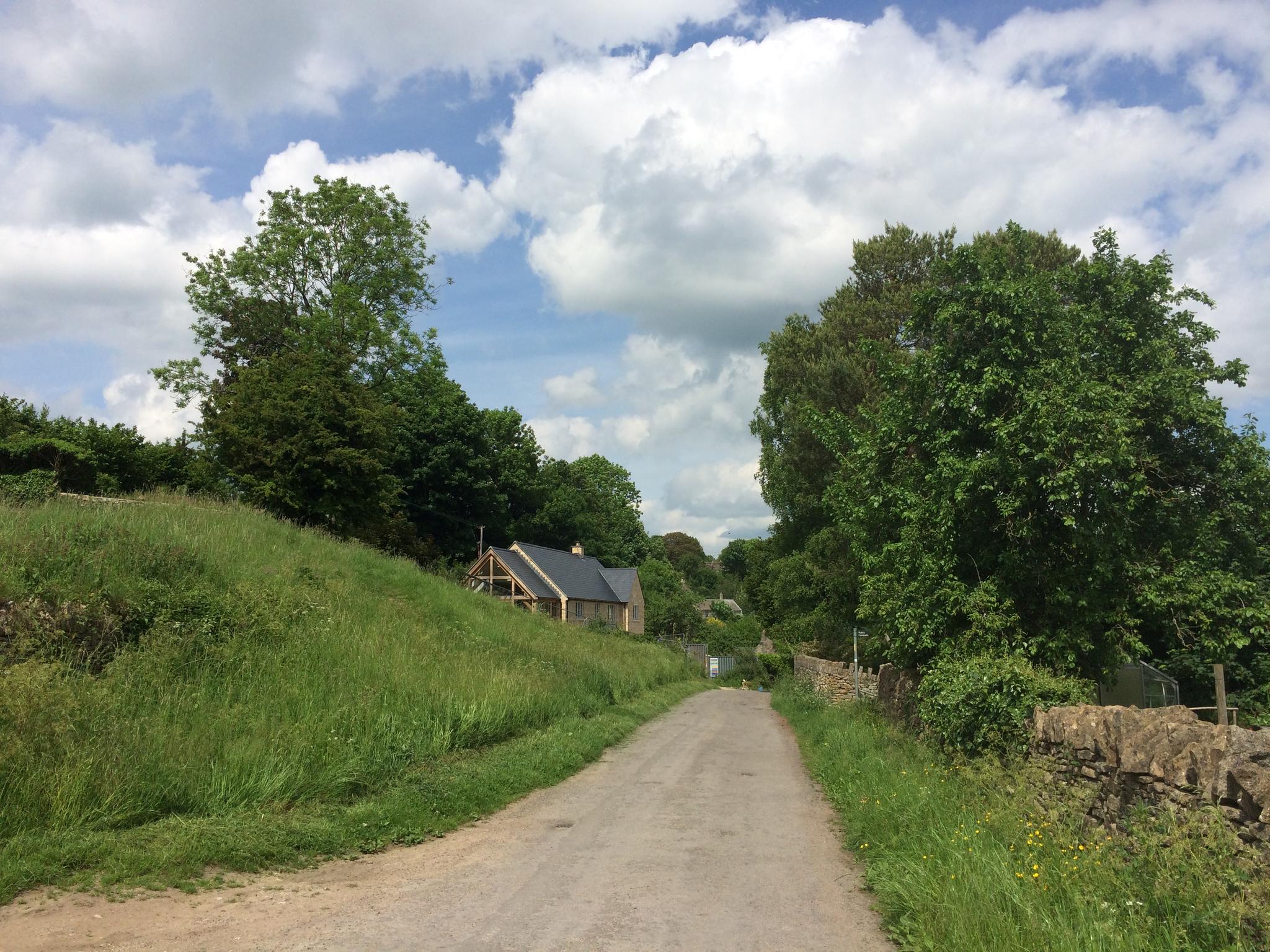
France Lynch sits on the high south-facing ridge that forms the north wall of the Golden Valley — the same wall as Chalford Hill, but the eastern shoulder of it, divided by lanes rather than by any geographical break. The Old English *hlinc* — a hillside terrace or ridge of high land — is exactly what the village is built on. The ground drops away to the south toward the canal and the GWR Golden Valley Line at the valley floor; the plateau runs north toward Bisley and Eastcombe. The settlement is compact: a tight grid of narrow winding lanes around the Kings Head, the church, the old school, the Church Rooms and a recreation ground, with Lynch Road as the main spine running east-to-west to meet Chalford Hill at the western end. The whole hamlet sits in Chalford civil parish — France Lynch has no separate council — and the postal address is GL6 8, shared with Chalford Hill and Brownshill. You arrive here by lane, never by road, and the village is small enough that everyone walks everywhere. The view south, off the front of the ridge, runs across the canal and the railway and the wooded valley wall opposite to the high ground of Frampton Mansell. The Cotswold Way passes within reasonable walking distance, dropping south from the Bisley plateau through the parish toward Sapperton.

Chapter 02
The Distinction Locals Draw.
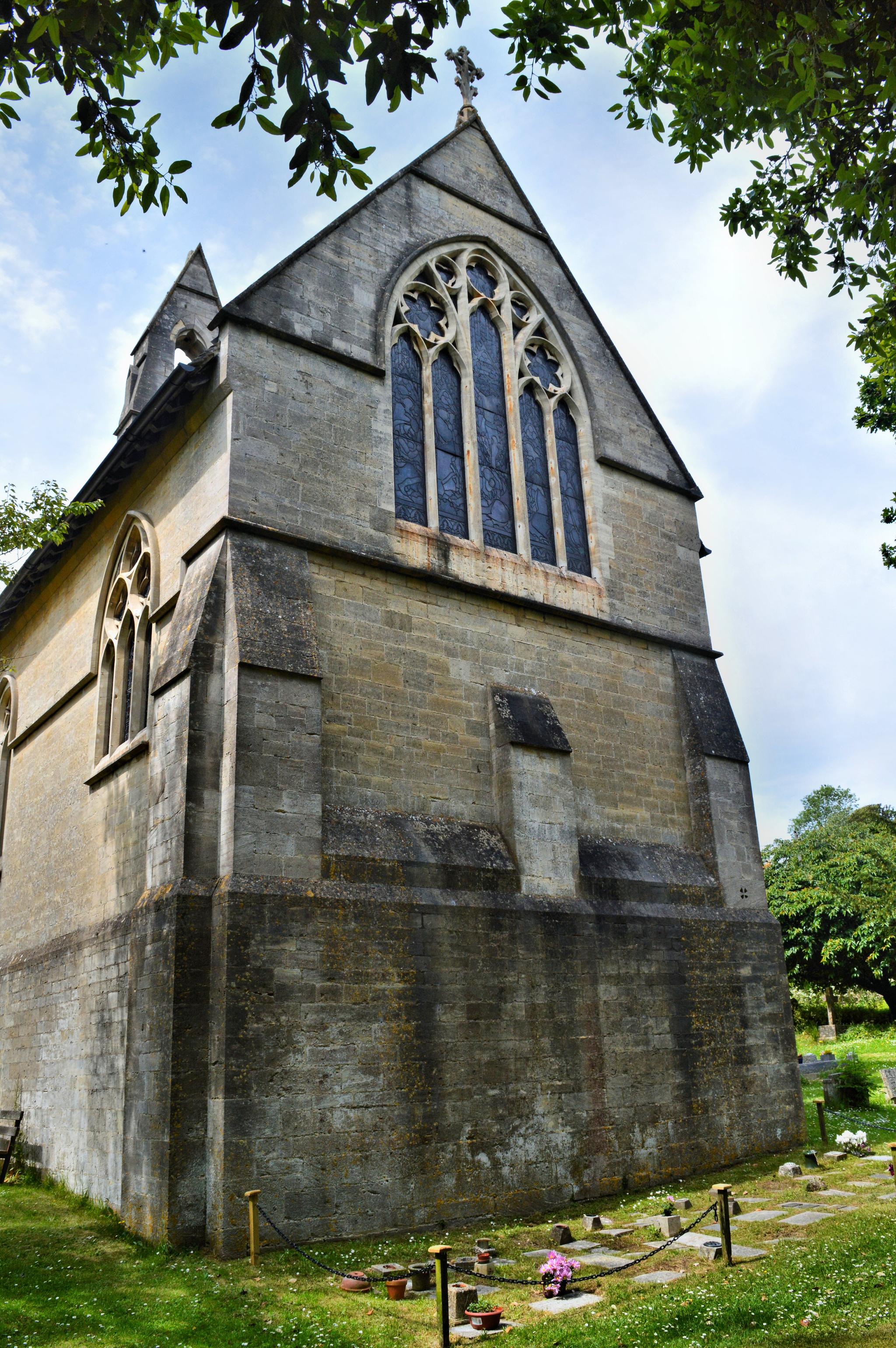
To an outsider, France Lynch and Chalford Hill are the same place: the lanes touch, the postcodes overlap, both feed the same primary school, both bury in adjacent churchyards, both stand on the same ridge. Locals do not see it that way. The line is drawn — quietly but firmly — at the point where Chalford Hill's grid of Victorian cottages around the Baptist Tabernacle gives way to the narrower medieval-pattern lanes around St John the Baptist. The two settlements have different founding stories (Chalford Hill grew up around the cloth trade and the Tabernacle from 1747; France Lynch crystallised around the dissenting France Meeting of the 1690s and a chapel that has since migrated down to Chalford Hill as the France Congregational Chapel of 1819), different anchor buildings, and — for most of the 20th century — different schools. France Lynch Church of England National School opened opposite St John the Baptist in 1871 and closed in 1931 as enrolment fell; the building survives as the Church Rooms, bought by the diocese in 1954 and still the village's only indoor community space. Children of the parish now travel west along the ridge to Chalford Hill Primary School, and the social weight of the modern village sits behind that school run. Population is small — a few hundred at most, never separately counted because the settlement does not have its own civil boundary — but the parish (Chalford, Chalford Hill, France Lynch, Bussage, Brownshill) totalled 6,056 at the 2021 Census. France Lynch is the smaller half of a two-village hilltop. The distinction is real, and worth knowing on the way in.
---